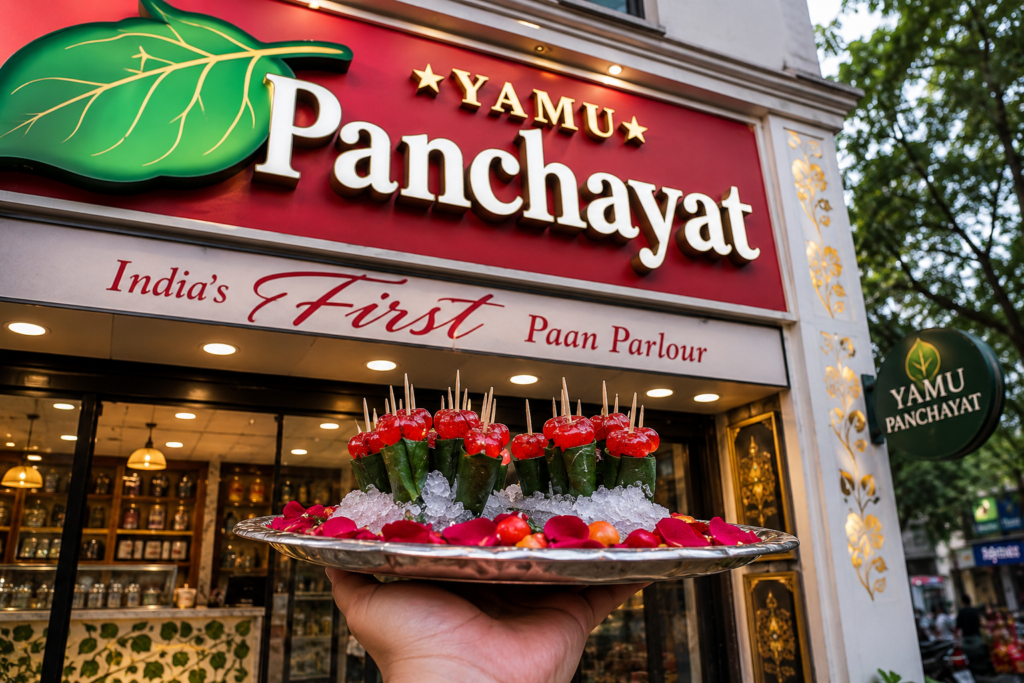
Trying paan for the first time can be a little confusing.
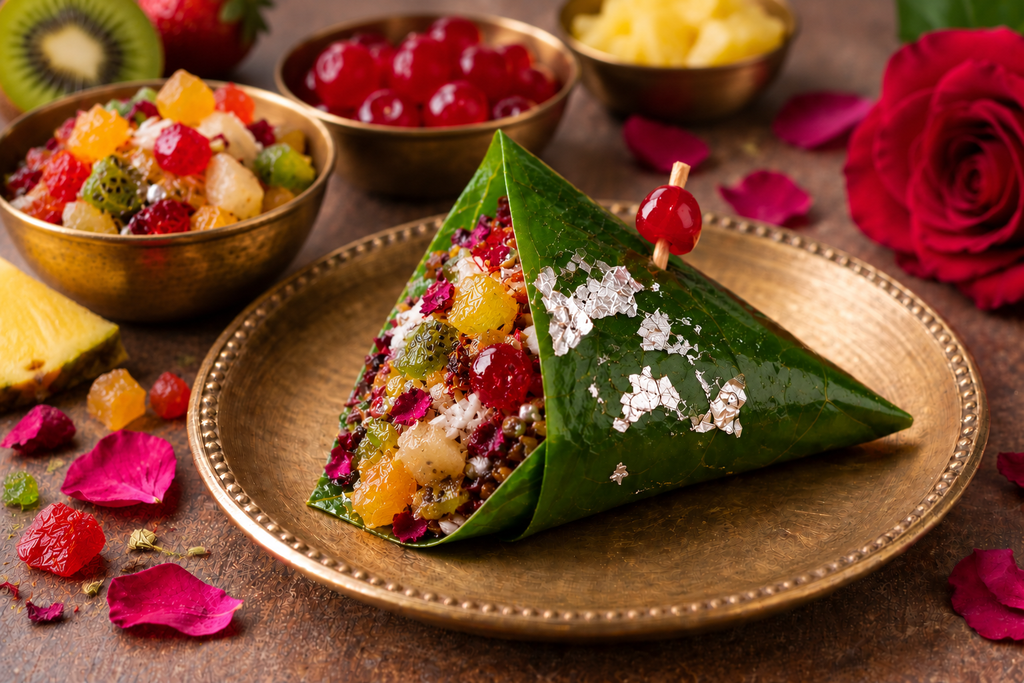
You walk into a paan shop and see fresh green leaves, small containers filled with colourful ingredients, sweet fillings, spices, nuts, and several varieties with names you may have never heard before.
Then comes the question:
“What should I try?”
If you have never had paan before, there is no need to feel overwhelmed. Paan is not one fixed recipe. It comes in many styles, and the right choice depends largely on the flavours you enjoy and how adventurous you want to be.
Some paans are sweet and gentle. Others have stronger, more traditional flavours. Some focus on fragrant ingredients, while modern varieties can feel almost like a dessert.
This guide will help you understand the basics so that your first paan can be an enjoyable experience.
First, What Exactly Is Paan?
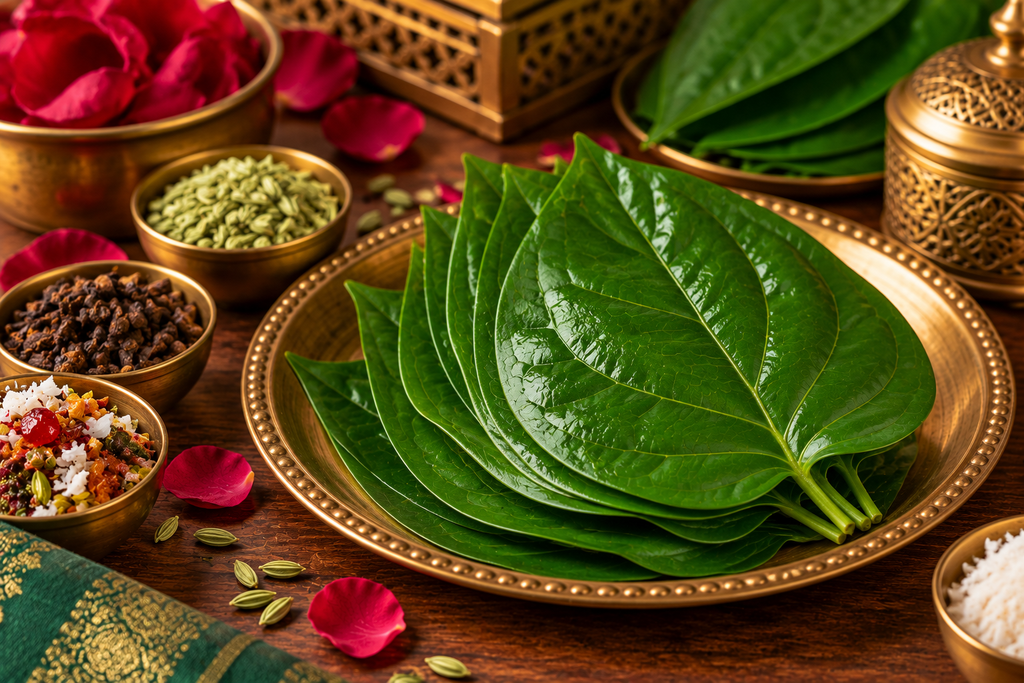
Paan is a preparation made by placing different ingredients inside a betel leaf and folding it into a small parcel.
The ingredients can vary significantly depending on the type of paan and regional tradition.
A traditional preparation may include ingredients such as catechu (katha), slaked lime (chuna), areca nut (supari), spices, fennel and other flavourings. Sweet varieties may include ingredients such as gulkand, coconut, sweetened fennel, dried fruits or other additions.
There isn’t one recipe that everyone follows.
That is why two paans can look similar from the outside but taste completely different.
For a first-time customer, understanding this variety is more useful than simply looking for a single “best” paan.
What Should a Beginner Look for in a Paan?
The easiest way to choose your first paan is to think about flavours you already enjoy.
Do you like sweets?
Do you enjoy floral flavours?
Do you prefer something fresh and aromatic?
Are you interested in trying a traditional preparation?
Your answers can make the choice much easier.
If you normally enjoy desserts and sweet flavours, a sweet paan may be a comfortable starting point. If you enjoy spices and stronger traditional flavours, you may want to explore a more classic preparation.
The important thing is not to choose something simply because it sounds popular.
Choose something that matches your taste.
Sweet Paan: An Easy Introduction
For many first-time customers, sweet paan is a natural place to start.
Sweet paan is generally made without tobacco and focuses more on sweet and aromatic ingredients. Depending on the preparation, you may find gulkand, coconut, fennel, candied ingredients, cherries, dry fruits or other flavourings inside.
The result is usually quite different from what someone unfamiliar with paan might expect.
Instead of a strong or unfamiliar taste, the experience can be fragrant, sweet and layered.
If you already enjoy Indian sweets, rose flavours, dry fruits or fennel, sweet paan may be worth exploring.
What Is Gulkand Paan?
Gulkand is a sweet preserve traditionally made from rose petals and sugar.
It is widely used in sweet paan and gives it a distinctive floral sweetness.
Gulkand can be a good choice for someone who enjoys delicate, aromatic flavours rather than very strong spices.
The combination of the fragrant betel leaf with the sweetness of gulkand creates a flavour that is quite different from ordinary desserts.
If you like rose-flavoured sweets, this is one variety you may want to ask about.
What About Chocolate Paan?
Modern paan has moved well beyond traditional flavour combinations.
Chocolate paan is one example.
It uses the familiar betel leaf as the base but introduces chocolate or chocolate-inspired ingredients into the preparation. Depending on the recipe, it may also contain nuts, sweet fillings or other garnishes.
For someone who is curious about paan but hesitant about traditional flavours, a modern dessert-style preparation can be an interesting introduction.
It is also a reminder that paan culture continues to evolve.
Traditional and modern varieties can exist side by side.
If You Want a More Traditional Experience
If your interest is in understanding paan as a traditional Indian preparation, ask the paan maker about their classic or traditional varieties.
A traditional paan may have a more pronounced combination of betel leaf, aromatic ingredients and other customary fillings.
The flavour can be more complex than a sweet paan.
You may notice bitterness, sweetness, spice, aroma and astringency coming together rather than one dominant flavour.
This is where the experience becomes more about appreciating the ingredients and preparation than simply looking for something sweet.
If it is your first time, tell the paan maker.
A good paan maker can explain what goes into the preparation and help you choose something appropriate for your taste.
Ask for a Mild Preparation if You’re Unsure
You don’t have to start with the strongest or most traditional option.
If you’re unsure about paan, simply tell the person preparing it that you are trying it for the first time.
This is actually one of the easiest ways to get a better experience.
You can say that you prefer something sweet, mild, aromatic, or without certain ingredients.
Paan making is quite personal. The preparation can often be adjusted according to what the customer likes.
There is no prize for choosing the most complicated paan on your first visit.
Start with something you are comfortable trying.
Should Your First Paan Contain Tobacco?
If you are trying paan for the first time, you should know that tobacco is not an essential ingredient of paan.
Traditional sweet paan, for example, is generally prepared without tobacco.
Tobacco-containing betel preparations are a separate category, and tobacco use carries well-established health risks. Areca nut itself is also associated with significant health risks, including cancer risk, so it should not be considered a harmless ingredient simply because it is traditionally used.
For someone simply looking to experience paan culture and flavours, asking for a tobacco-free preparation is an option.
If you’re unsure about the ingredients, ask before ordering.
Don’t Confuse Paan With Pan Masala
The names can sometimes cause confusion, especially for someone who has never explored paan culture.
Traditional paan is a fresh preparation made using a betel leaf.
Pan masala is a commercially packaged product with its own formulation.
They are not the same thing.
Similarly, tobacco-containing products such as gutka should not automatically be treated as traditional paan.
Understanding this difference helps you know exactly what you are ordering.
How Should You Eat Paan?
Your paan will usually arrive already folded.
There is no complicated ritual you need to learn.
Traditionally, paan is meant to be placed in the mouth and enjoyed slowly. Depending on the type, people may chew it gently to release the flavours.
If you are trying a sweet paan, take your time.
You may notice several flavours appearing one after another—the aroma of the leaf, sweetness from the fillings, the fragrance of spices and the texture of the other ingredients.
You don’t need to rush through it.
Part of the enjoyment is experiencing how the flavours come together.
What If You Don’t Like the First One?
That’s perfectly fine.
Paan is a broad category, and one variety doesn’t represent all of them.
Someone who doesn’t enjoy a strong traditional paan might love a sweet gulkand preparation.
Someone who finds sweet paan too mild might prefer a more traditional style.
Someone who enjoys experimenting may prefer modern varieties.
Think of your first paan as discovering a flavour category rather than making a final decision about paan itself.
How to Order Your First Paan at a Shop
If you don’t know what to order, you can keep it very simple.
Tell the paan maker:
“I’ve never tried paan before. Can you suggest something mild?”
From there, mention the flavours you like.
For example:
“I prefer something sweet.”
Or:
“I like dry fruits.”
Or:
“I don’t want tobacco.”
This gives the paan maker enough information to guide you.
You don’t need to know the names of ten different varieties before visiting a paan shop.
That’s what the person behind the counter is there for.
A Few Things to Notice When Your Paan Is Being Prepared
One of the enjoyable parts of visiting a traditional paan shop is watching the preparation.
Notice how the leaf is selected.
Look at how the ingredients are arranged.
Watch how small quantities of different fillings are added.
Then notice the way the leaf is folded.
A skilled paan maker can prepare a paan surprisingly quickly, but that speed usually comes from experience.
There is a balance involved in choosing the ingredients, controlling the quantities and making sure the final paan holds together neatly.
Once you understand this, paan becomes more interesting than simply something you eat.
It becomes a small piece of food craftsmanship.
Choosing Paan for Different Occasions
Your choice can also depend on when you are having it.
After a Meal
Aromatic or sweet preparations can be a natural choice for people who traditionally enjoy paan after eating.
At a Wedding
Sweet and visually attractive varieties are often popular at celebrations because they are easy to share and can appeal to guests with different tastes.
With Friends
This is a good opportunity to experiment.
If everyone has a different favourite, try different varieties and compare the flavours.
For a First Experience
Keep it simple.
A mild, tobacco-free preparation can allow you to focus on the flavours without being overwhelmed by unfamiliar ingredients.
What Makes a Good Paan?
There isn’t one universal definition of a good paan.
But freshness and balance are important parts of the experience.
The leaf should be fresh and carefully handled.
The fillings should complement one another rather than overpowering the leaf.
The sweetness, aroma, texture and other flavours should work together.
And the preparation should feel fresh rather than something that has been sitting around for a long time.
A good paan maker also pays attention to the customer.
The same recipe may not suit everyone.
Personal preference matters.
Your First Paan Doesn’t Have to Be Your Last
One of the nicest things about discovering paan is realizing how much variety exists.
Your first paan may be sweet.
The next time, you might try something floral.
Later, you may become curious about a regional style.
Eventually, you may develop a favourite that you order without even looking at the menu.
That is how many food traditions become personal.
You start with curiosity and gradually discover what you enjoy.
Exploring Paan in Delhi
Delhi is a particularly interesting place to explore paan because the city’s food culture brings together traditions from many parts of India.
Traditional paan shops sit alongside modern food businesses, and customers can find preparations ranging from familiar classics to contemporary sweet varieties.
If you’re visiting Delhi and have never tried paan before, don’t worry about knowing exactly what to order.
Walk into a reputable paan shop, tell the maker that it’s your first time, explain the flavours you enjoy, and let them guide you.
The experience is often as much about the preparation and conversation as it is about the final paan.
Final Thoughts
Choosing your first paan doesn’t need to be complicated.
Start by thinking about the flavours you already enjoy. If you prefer sweets, explore a sweet preparation. If you enjoy traditional flavours, ask about a classic variety. If you’re curious about something different, modern paan offers plenty of options to explore.
Most importantly, ask questions.
A paan maker can tell you what is inside, explain the differences between varieties and help you find something suited to your taste.
Because paan is not just one flavour or one recipe.
It is a tradition with many different expressions.
And your first paan is simply the beginning of discovering them.
Ready to Try Your First Paan?
If you’re in Delhi and thinking about trying paan for the first time, come visit Yamu’s Panchayat.