
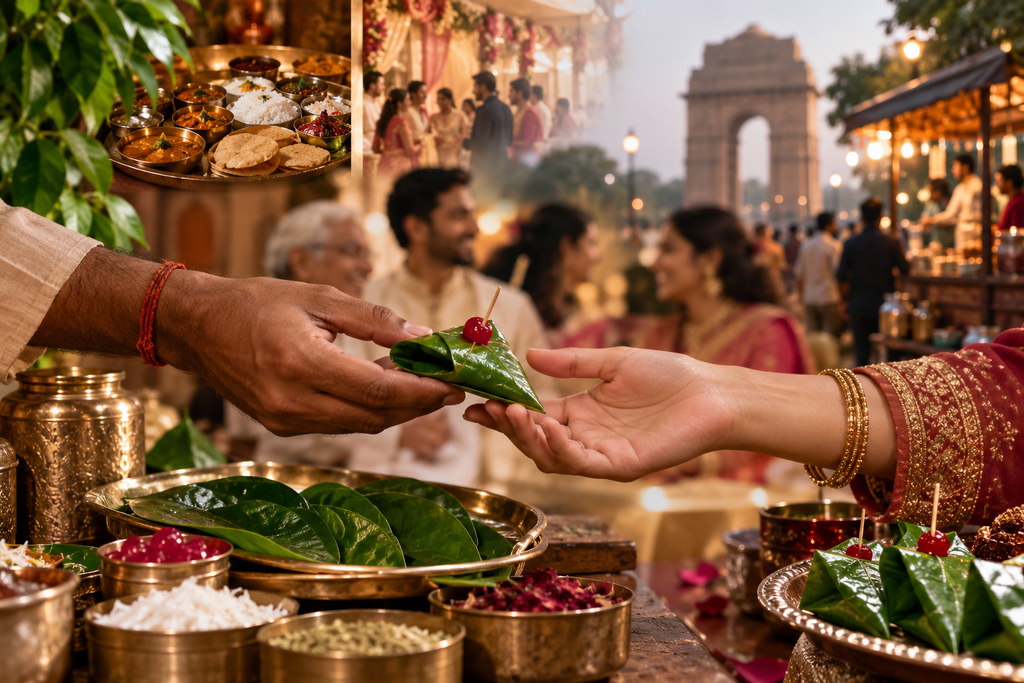
Food in India has always been about more than satisfying hunger.
A meal can bring a family together, welcome a guest, mark a festival, celebrate a wedding, or simply create a reason for people to sit and talk. This is one of the things that makes Indian food culture so rich: dishes often carry memories, traditions, and social meaning along with their flavours.
Paan is a good example of this.
For generations, a carefully prepared betel leaf has been served after meals, offered to guests, enjoyed during celebrations, and prepared according to regional tastes. While the ingredients and styles have changed over time, paan has remained connected to an important part of Indian life: the tradition of sharing food and making people feel welcome.
But what makes paan so culturally significant?
The answer goes far beyond the ingredients inside the leaf.
Paan Is More Than Something You Eat
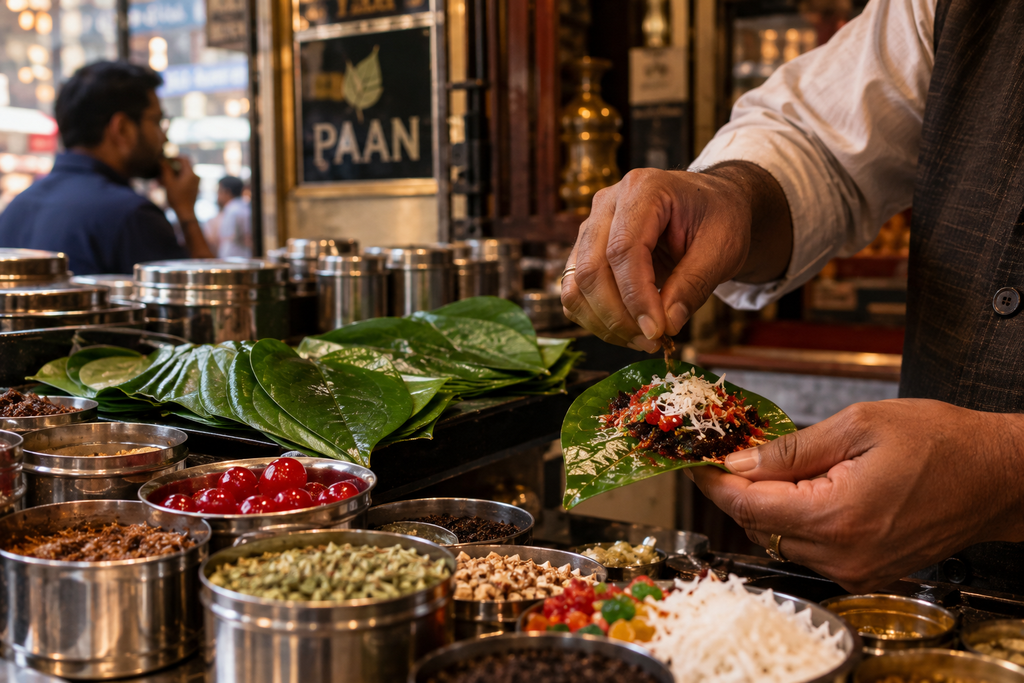
At first glance, paan seems simple.
A betel leaf is prepared with selected ingredients, folded neatly, and served. Depending on the variety, it may contain ingredients such as gulkand, fennel, coconut, cardamom, cloves, areca nut, catechu, or other flavourings.
Yet paan has never been defined only by its recipe.
The same leaf can have a completely different meaning depending on where and when it is served.
At a family gathering, it can be part of a familiar tradition. At a wedding, it can become part of the celebration. At the end of a meal, it can represent hospitality. At a local paan shop, it can be the beginning of a conversation.
This combination of food and social interaction is what gives paan its cultural character.
Paan and the Tradition of Hospitality
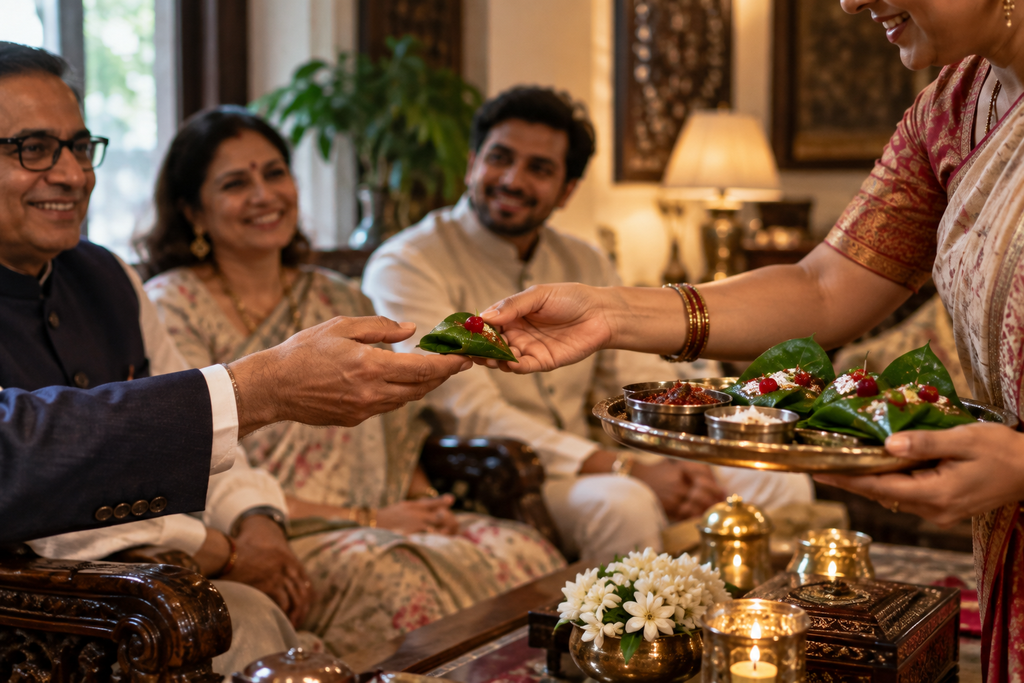
One of the strongest connections paan has in Indian culture is hospitality.
In many Indian households, offering something to a guest is considered a gesture of warmth and respect. Depending on the occasion, that could mean tea, sweets, snacks, a full meal, or paan.
Traditionally, offering paan after a meal could signal that the gathering was not simply about eating. There was time to sit, talk, and enjoy the final part of the occasion.
The paan itself became part of that experience.
A guest could be offered a carefully prepared leaf, sometimes made according to their preference. Sweet, aromatic, or more traditional preparations could be chosen depending on the person and occasion.
The gesture mattered as much as the food.
Why Is Paan Associated With the End of a Meal?
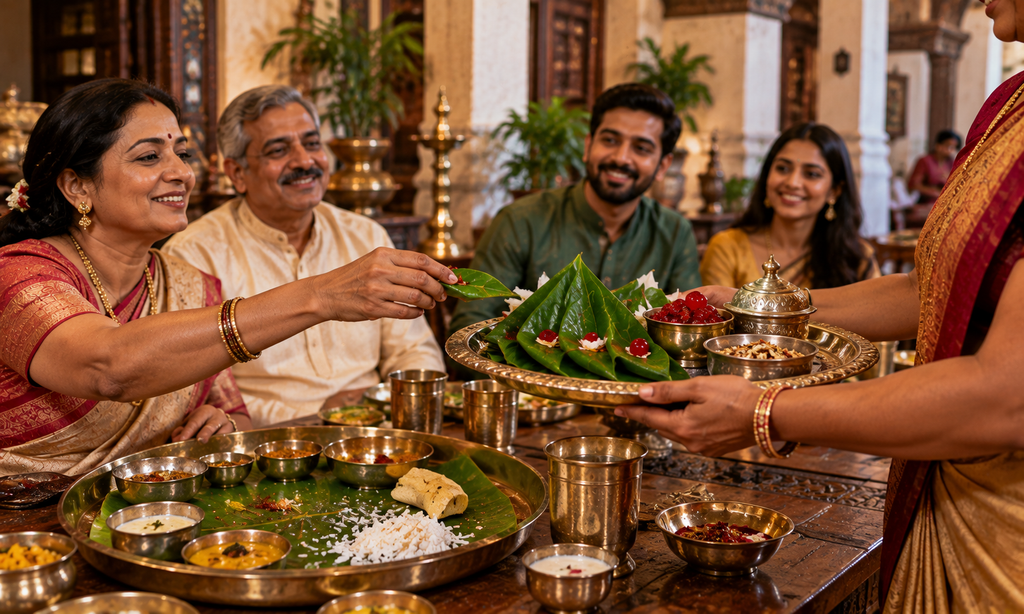
Paan has long been connected with the conclusion of meals in parts of Indian society.
There is a practical side to this tradition as well as a cultural one. Traditional paan preparations often include aromatic ingredients such as cardamom, fennel and cloves, which give the preparation a distinctive fragrance and flavour.
But the custom became much bigger than simply what happened after eating.
The end of a meal is often when conversations continue.
People remain seated, guests are not immediately expected to leave, and the atmosphere becomes more relaxed. Paan naturally became part of this social moment.
Over time, the phrase “after the meal” and the idea of having paan became closely connected in many communities.
Paan Has a Place in Celebrations
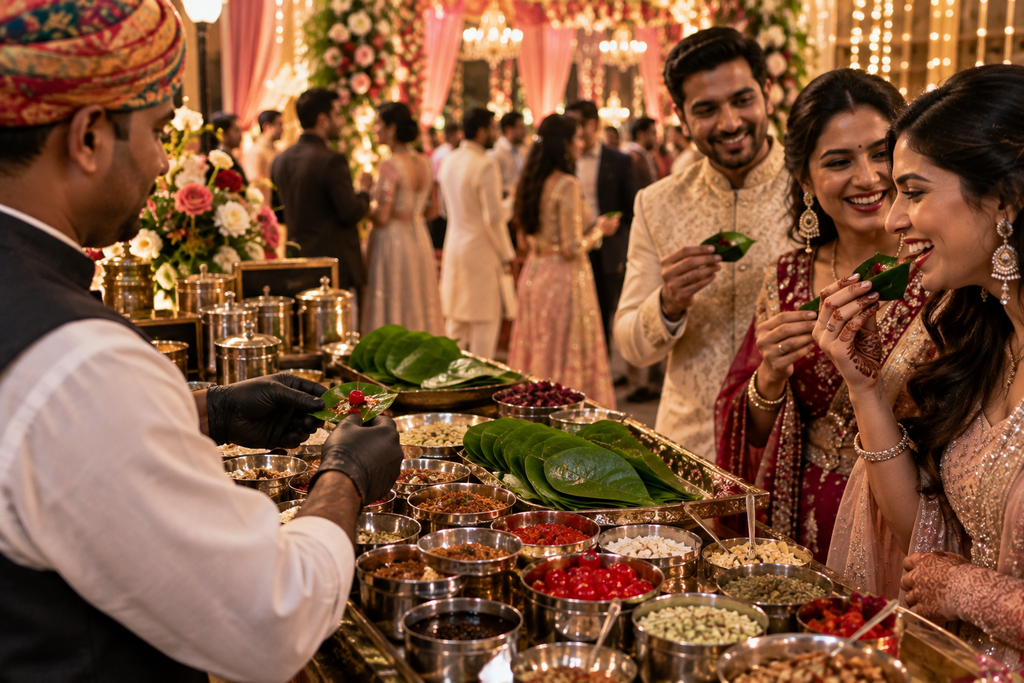
Think about an Indian wedding.
There may be food counters, sweets, desserts, drinks and countless other details planned for the guests. Among all these things, paan has managed to maintain its own place.
Paan counters are often included at weddings and celebrations because they offer guests something different from the main meal.
The preparation itself can also become part of the attraction.
Guests can watch the paan maker select a leaf, add the fillings, fold it and present it. Different varieties can be offered, allowing people to choose according to their taste.
Sweet paan is particularly popular at celebrations because its flavour profile can appeal even to people who do not regularly eat traditional paan.
In this way, paan becomes both food and entertainment.
Paan Connects Different Generations
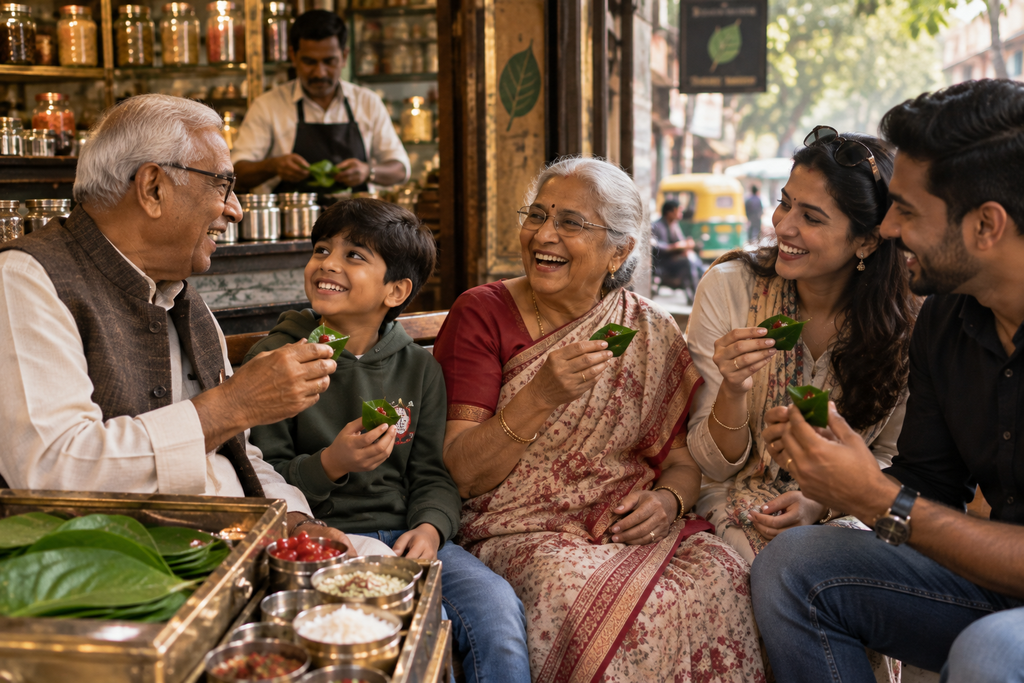
Many food traditions survive because they are passed from parents to children.
Paan is no different.
Someone may remember visiting a paan shop with their father or grandfather. Another person may associate it with weddings in their childhood. Someone else may have grown up watching a family member prepare paan at home.
These memories give food a meaning that cannot be found in a recipe book.
A modern generation may prefer different flavours, but that does not necessarily mean the older tradition disappears. Instead, new varieties can exist alongside traditional ones.
A classic preparation and a modern sweet paan can belong to the same culture while offering completely different experiences.
That ability to adapt has helped paan remain relevant.
Every Region Has Its Own Paan Story
India’s food culture is famous for regional diversity, and paan reflects that beautifully.
There is no single preparation that represents every part of the country.
Different regions have developed different preferences for betel leaves, fillings, spices, sweetness and preparation styles. Local ingredients and eating habits have influenced how paan is made and enjoyed.
This is why asking someone about their favourite paan can sometimes reveal where they grew up or what kind of food they are familiar with.
For some, the attraction may be a traditional preparation.
For others, it may be a sweet variety filled with gulkand and other ingredients.
The differences are part of what makes Indian paan culture interesting.
The Betel Leaf Is Part of the Craft
There is an art to making a good paan.
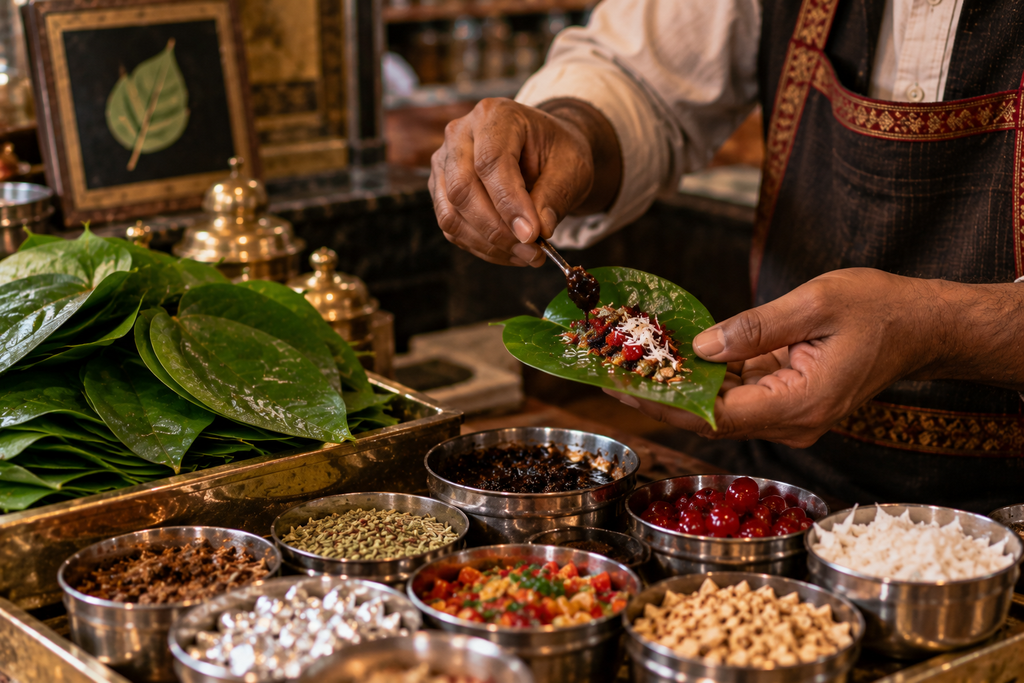
It is easy to look at the final folded leaf and think the preparation is simple. But experienced paan makers pay attention to details that a casual observer might miss.
The leaf needs to be fresh and suitable for the preparation.
The quantity of each ingredient matters.
Too much of one flavour can overpower everything else. Too little can make the paan feel incomplete.
The ingredients need to work together rather than compete with one another.
Then comes the folding.
A neatly folded paan is not just visually appealing. The way it is folded also makes it easier to handle and eat.
This knowledge is often learned through practice.
Like many traditional food crafts, paan making combines ingredients with experience.
The Paan Shop Is Part of Indian Street Culture
If you want to understand the cultural importance of paan, it is worth looking beyond the paan itself.
Look at the shop.
Traditional paan shops have often been small neighbourhood spaces where people stop for a few minutes. Someone comes to buy a paan, another person arrives for mukhwas, and a conversation starts.
The shop can become familiar territory.
People know the paan maker. The paan maker knows their preferences. Regular customers may not need to explain exactly what they want.
Sometimes a simple request is enough:
“Make it the usual way.”
That familiarity is an important part of the culture.
The paan shop is not always just a place where a product is purchased. It can also be a small social space within a neighbourhood.
Paan and the Culture of Conversation
Indian food often encourages people to stay at the table.
Tea does this.
Snacks do this.
Desserts do this.
And traditionally, paan has played a similar role.
Once the main meal is finished, there is still something to enjoy. The pace slows down. Conversations continue.
This is one reason paan has become associated with social gatherings.
The food itself creates a small pause between the meal and whatever comes next.
That pause has cultural value.
Why Sweet Paan Became So Popular
One of the most interesting developments in modern paan culture is the popularity of sweet paan.
Traditional preparations can have strong and distinctive flavours. Sweet paan introduced a softer and more dessert-like experience.
Ingredients such as gulkand, coconut, fennel, candied fruits and dry fruits can create a combination that is very different from more traditional preparations.
Modern paan makers have taken this idea even further.
Today, you may come across varieties inspired by desserts and contemporary flavours. Chocolate, dry fruits and other ingredients have found their way into modern paan menus.
For someone trying paan for the first time, these varieties can provide an easy introduction to the tradition.
For regular paan lovers, they offer something new to explore.
Paan Is Also About Personal Preference
There is no universal “right” way to enjoy paan.
Some people prefer a simple traditional preparation.
Some enjoy sweet flavours.
Some prefer strong aromatic ingredients.
Others are interested in trying something completely new.
That flexibility is another reason paan has remained part of Indian food culture.
A paan maker can adjust the preparation according to the person ordering it.
In that sense, paan is more personal than many packaged foods.
The final product is made for someone rather than simply taken from a shelf.
Paan in Modern Indian Culture
Paan has changed with modern India.
Traditional neighbourhood shops still exist, but paan can now also be found at specialized counters, restaurants, weddings, events and modern food businesses.
Presentation has become more important in some settings.
New flavours have appeared.
People who may never have visited a traditional paan shop can encounter paan at a wedding or celebration.
At the same time, traditional styles continue to be enjoyed by people who appreciate familiar flavours and preparation methods.
This mixture of old and new is an important part of the story.
Modern paan culture does not have to replace traditional paan culture. Both can exist together.
Paan in Delhi: Where Tradition Meets a Changing Food Scene
Delhi is a city where food traditions from different parts of India meet.
Its streets, markets and neighbourhoods reflect generations of migration and cultural exchange. Naturally, paan has found its own place within this environment.
In Delhi, you can find people looking for familiar traditional flavours as well as people interested in modern and creative varieties.
The city also has a strong culture of eating out, meeting friends and exploring different foods. Paan fits naturally into these habits because it can be enjoyed as the final part of a meal or as something shared during a social occasion.
For many Delhi residents, visiting a paan shop is not an elaborate event.
It can simply be part of the routine.
And that everyday familiarity is perhaps more important to food culture than grand celebrations.
The Difference Between Tradition and Modern Trends
It is easy to think that modern flavours are changing paan too much.
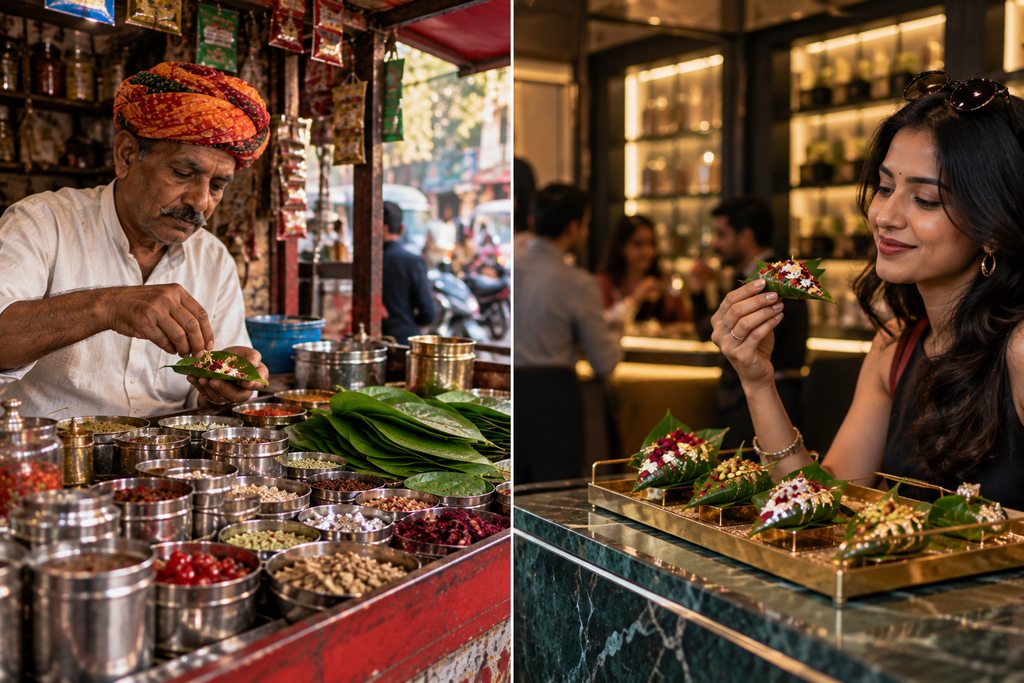
But food traditions have always evolved.
Ingredients that were once considered unusual can become familiar. New generations develop new preferences. Businesses respond to those preferences, and traditional recipes are sometimes adapted rather than abandoned.
The important thing is that the connection to the original tradition remains understandable.
A modern sweet paan may look very different from an older preparation, but it still carries the same basic idea of using the betel leaf as a carefully prepared vessel for flavour.
That connection gives modern variations their identity.
Why Paan Still Matters
The cultural importance of paan does not come from one particular ingredient.
It comes from everything surrounding it.
It is the conversation at the paan shop.
It is the paan offered to a guest.
It is the wedding counter where people gather after dinner.
It is the family memory of an older generation.
It is the regional recipe passed down through time.
It is the skill of the person preparing the leaf.
And it is the willingness to experiment with new flavours while still respecting an old tradition.
That is why paan has remained visible in Indian food culture for so long.
A Small Leaf With a Big Cultural Story
Paan may look small, but its place in Indian culture is anything but small.
Its importance comes from the way it connects food with people.
It can mark the end of a meal, welcome a guest, add something special to a celebration, or simply give friends another reason to sit together and talk.
Its flavours may continue to change. New varieties may continue to appear. Traditional preparations may continue to be passed down.
And that is exactly what makes a living food tradition.
Paan is not simply something India inherited from the past.
It is something each generation continues to experience, adapt and share.
Experience the Tradition of Paan in Delhi
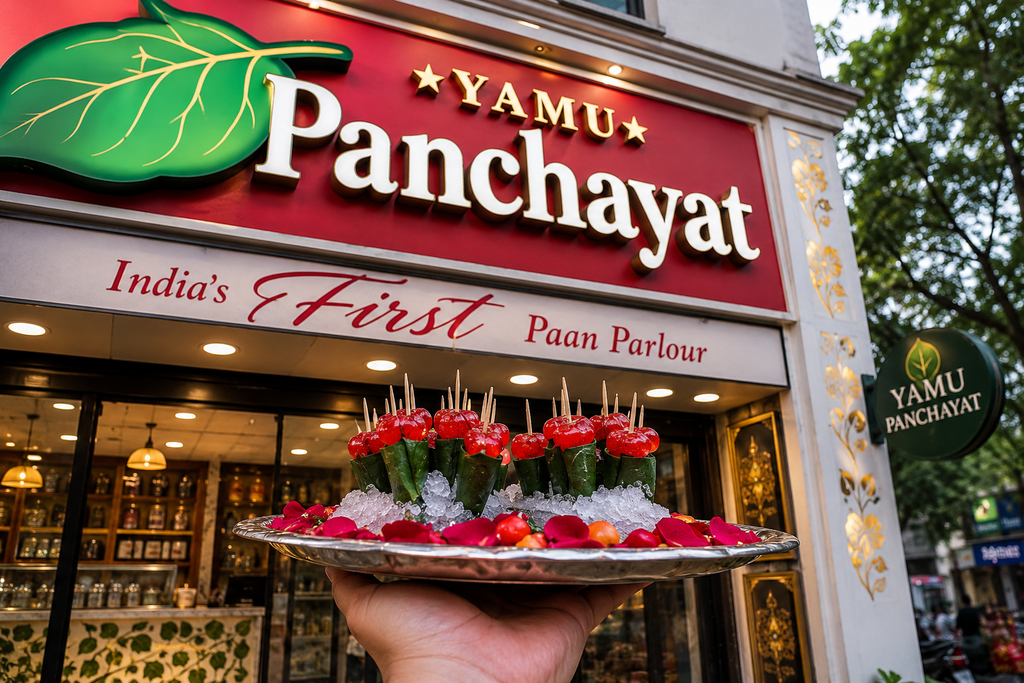
If you are in Delhi and want to experience the flavours and traditions that have made paan such an enduring part of Indian food culture, come visit Yamu’s Panchayat.
From familiar traditional preparations to contemporary flavours, we welcome you to discover the craft, variety and experience of paan for yourself.